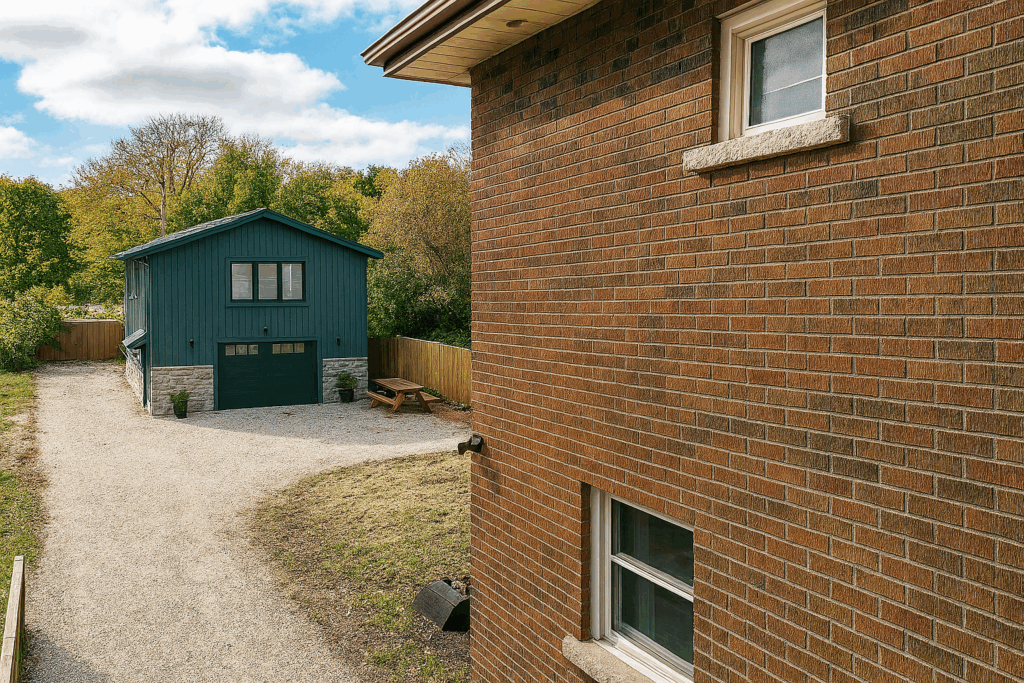
Many homeowners in Guelph are surprised to learn that the City offers financial grants for building Additional Dwelling Units (ADUs).
Through the Affordable Housing Community Improvement Plan (CIP), the City of Guelph provides funding to encourage the creation of new rental housing, including backyard garden suites and other ADUs.
For homeowners considering a detached ADU in Guelph, this program can help offset some of the costs associated with construction and infrastructure upgrades.
Here’s how it works.
What Is the Guelph ADU Grant?
The City’s Additional Dwelling Unit Grant Program is designed to encourage the development of new rental housing within existing neighbourhoods.
The program provides financial grants to property owners who build new ADUs intended for rental use.
There are two primary streams available.
Homeowner Stream
The Homeowner Stream is intended for homeowners building ADUs on their own property.
Available funding includes:
- Up to $20,000 per ADU
- Maximum of three ADUs per project
Additional funding may also be available for:
- Accessibility improvements beyond Ontario Building Code requirements (up to $10,000 per unit)
- Municipal infrastructure or utility service upgrades
One key eligibility requirement:
The homeowner must live on the property.
Project Stream
The Project Stream is designed for developers or investors building ADUs as part of larger redevelopment projects.
Available funding includes:
- Up to $15,000 per ADU
- No maximum number of units per project
Accessibility funding of up to $10,000 per unit may also be available for projects that include accessibility features beyond the building code.
Additional Funding for Infrastructure Upgrades
One of the most valuable aspects of the program is funding for municipal infrastructure and private utility service upgrades.
This can be particularly helpful for ADU projects that require upgrades such as:
- Water service upgrades
- Utility service upgrades
- Municipal infrastructure work within the public right-of-way
The available funding depends on how many ADUs are included in a project.
| ADU Project |
Infrastructure Grant Available |
| 1 ADU (second unit on property) |
Up to $20,000 |
| 1 ADU (third or fourth unit on property) |
Up to $20,000 |
| 2 ADUs |
Up to $40,000 |
| 3 or more ADUs |
Up to $60,000 |
These funds are intended to help offset infrastructure costs that might otherwise discourage homeowners from building new rental units.
What Types of ADU Projects Qualify?
The program supports several types of ADU construction, including:
- New detached backyard ADUs (garden suites)
- Additions to existing homes that create new units
- Conversions of existing spaces such as basements, garages, or attics
To qualify, the unit must include full private living facilities:
- Kitchen
- Bathroom
- Sleeping area
- Living space
In other words, the unit must function as a fully self-contained dwelling.
Affordable Rent Requirements
To qualify for the Additional Dwelling Unit Grant, the unit must be rented at rates that meet the City’s definition of affordable rent.
Under the current program guidelines, the maximum affordable rents are approximately:
| Unit Type |
Maximum Monthly Rent |
| Bachelor / Studio |
$1,271 |
| 1 Bedroom |
$1,598 |
| 2 Bedroom |
$1,740 |
| 3 Bedroom + |
$1,935 |
These limits are based on the City’s affordable housing benchmarks and may be updated periodically.
Because of these rent caps, the program is often best suited for:
- Studio ADUs
- 1-bedroom ADUs
- Long-term rental units aimed at moderate income tenants
Higher-income rental strategies, such as 4-bedroom student rentals, may exceed these rent thresholds and therefore may not qualify for the grant.
When the Grant Makes the Most Sense
For some homeowners, accepting the rent limits in exchange for the grant can make strong financial sense.
For example:
A studio ADU receiving a $20,000 grant can meaningfully reduce the overall project cost while still generating steady rental income.
In other cases, owners may choose to rent at market rates instead of participating in the program.
The right decision depends on:
- The size of the ADU
- Expected rental income
- Long-term investment strategy
Combining the Grant With Other Programs
Another advantage of the program is that it can be combined with other incentives and funding programs, provided that the total of all grants and fee exemptions does not exceed the eligible project costs.
This means homeowners may be able to layer multiple programs together depending on their specific project.
How Sophie’s Flats Helps Clients Navigate the Program
The Affordable Housing CIP is a valuable program, but like many municipal incentives, the application process can be complex.
At Sophie’s Flats, we help clients:
- Determine whether their ADU project qualifies
- Understand how the grant interacts with servicing requirements
- Coordinate design and permitting to align with program eligibility
- Evaluate whether affordable rents or market rents make more sense for their situation
Because we specialize in detached ADUs in Guelph, we design projects that align with the City’s evolving housing policies and housing initiatives.
Final Thoughts
Guelph’s Affordable Housing Community Improvement Plan reflects a broader shift in housing policy, encouraging gentle density and new rental units within existing neighbourhoods.
For homeowners building an ADU intended for long-term rental, the Guelph ADU Grant can provide meaningful financial support while helping address the city’s housing shortage.
Understanding how the program works — and whether it aligns with your investment goals — is an important first step when planning an ADU project.
Interested in Building a Detached ADU in Guelph?
Sophie’s Flats specializes in designing and building fully custom, Tarion-registered detached ADUs tailored to each property.
We can help evaluate:
- Zoning feasibility
- Servicing requirements
- Potential eligibility for available grants
Book a consultation to see what may be possible on your property.